
Urethane Cement Flooring Vancouver
Seamless, heavy-duty flooring for commercial kitchens, food-production areas, industrial plants and wet service environments across Metro Vancouver and British Columbia.
When Standard Epoxy Is Not Enough
Hot washdowns, oils, food acids, impact, moisture and heavy wheeled traffic can shorten the life of an ordinary coating. Cementitious urethane combines resin technology with a cement-based binder to create a durable floor system for demanding commercial and industrial conditions.
Miyagi Construction assesses the slab, repairs damaged concrete, prepares the surface and installs the specified flooring system under one contractor. System selection depends on service temperature, chemical exposure, slip resistance, drainage, thickness and required return-to-service time.
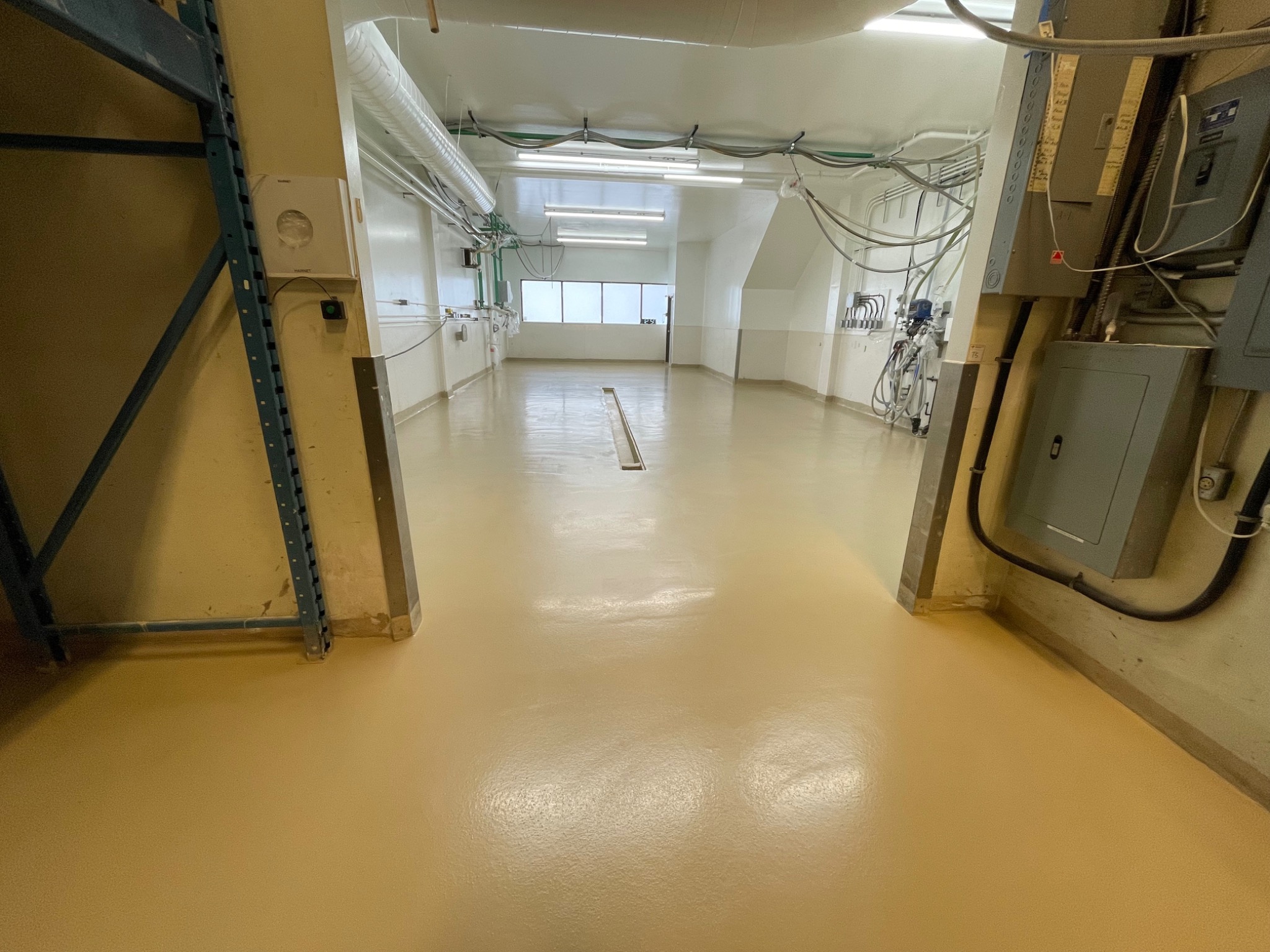
Urethane Cement Flooring Solutions
The correct build-up is selected for the slab condition, operating environment and performance requirements—not simply by colour or appearance.
PurCem Flooring
Cementitious urethane systems for kitchens, production areas, processing plants and spaces exposed to moisture, chemicals or temperature change.
Cove Base & Details
Integral cove base, drain transitions, penetrations and wall-to-floor details that reduce hard-to-clean joints and support facility hygiene.
Concrete Restoration
Removal of unsound concrete, crack repair, patching and moisture-control work completed before the resinous flooring system is installed.
Our Flooring Process
Assess
Review traffic, washdown, chemicals, temperature, drainage, moisture and shutdown requirements.
Prepare
Mechanically prepare the slab and remove contamination, weak concrete and incompatible existing coatings.
Repair
Treat cracks, spalls, joints and transitions, then establish the required surface profile and details.
Install
Apply the specified urethane-cement system, aggregate and topcoat while controlling sequencing and cure.
1,300-Square-Foot Commercial Floor
A heavy-duty flooring scope planned for a commercial production environment requiring durability, slip resistance and coordinated return to service.
Sikafloor PurCem System
The work included mechanical surface preparation, concrete repairs and installation of a nominal 1/4-inch Sikafloor-22 NA PurCem system. A full aggregate broadcast was incorporated for texture, followed by Sikafloor-31 NA PurCem as the specified finish coat.
The approximately 1,300-square-foot installation was sequenced around facility access and completed through planned work phases. Reopening was coordinated only after the installed system reached the required cure for the site conditions and intended service.
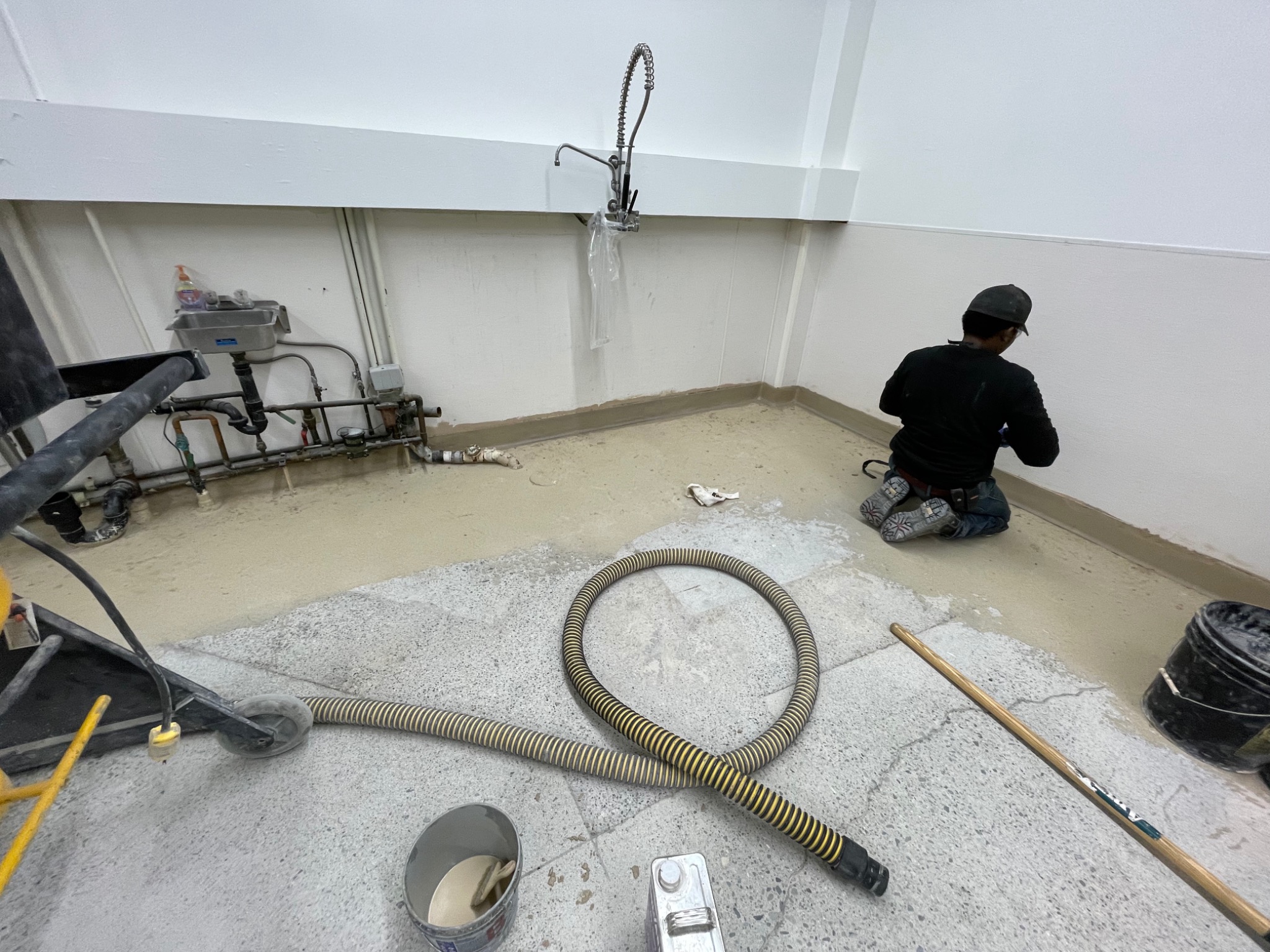
Prepare, Repair and Protect
Long-term performance starts below the coating. Surface preparation and concrete repair are as important as the selected resinous system.
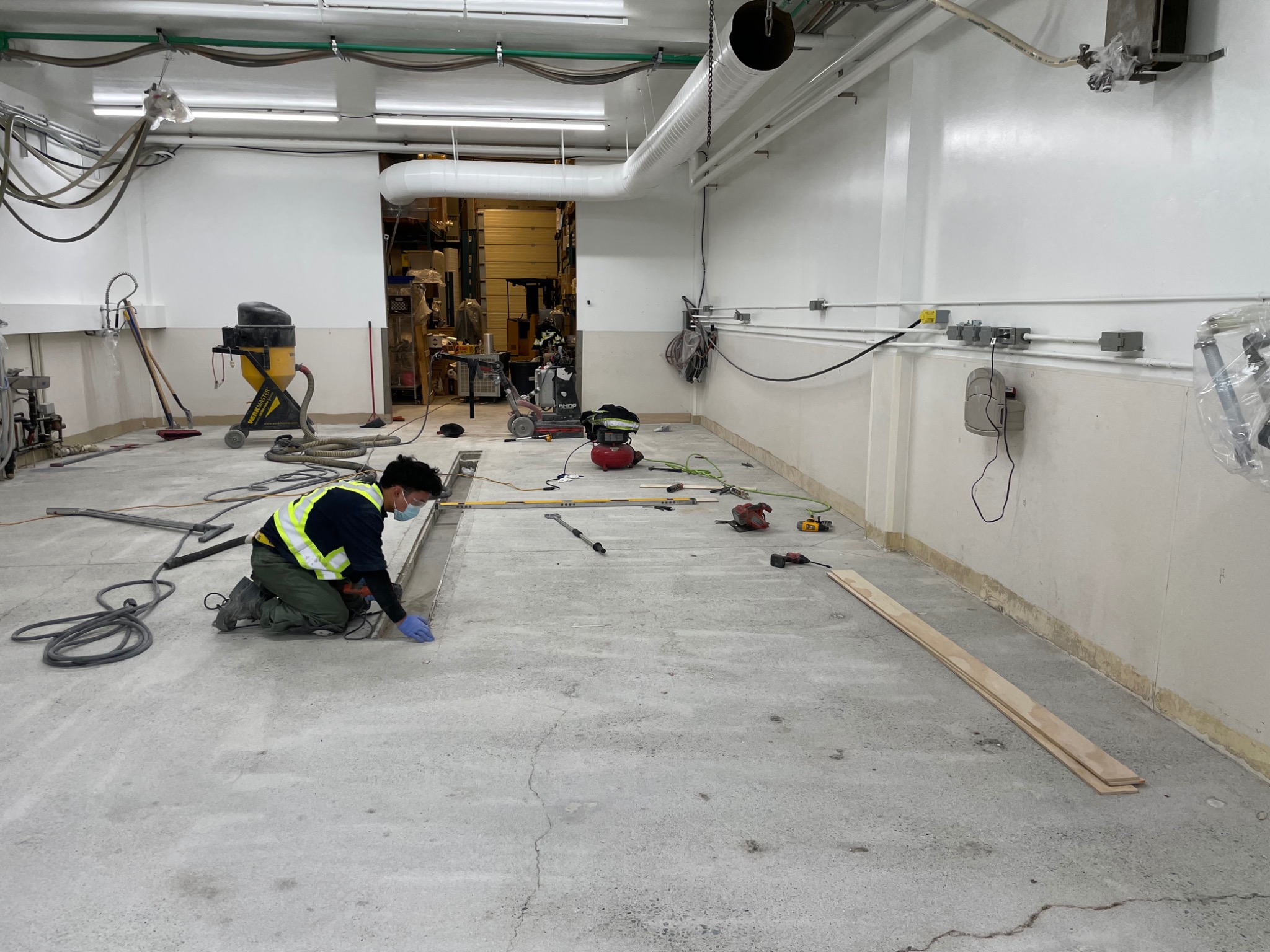
Where Urethane Cement Is Used
Plan the Right Floor Before Shutdown
Send us the floor area, current condition, operating environment and available shutdown window. We will review the information and advise whether a site assessment or moisture testing is required.
Helpful Information:
- Facility type and approximate square footage
- Existing coating or bare-concrete condition
- Chemical, heat and washdown exposure
- Drain, cove-base and slope requirements
- Available shutdown and reopening time
Urethane Cement Flooring FAQ
What is the difference between urethane cement and epoxy flooring?
Urethane cement is generally selected for demanding wet, hot, chemical or food-processing environments. Epoxy can be an excellent choice for many commercial floors, but the correct system depends on the slab and operating conditions.
Can urethane cement be installed over damaged concrete?
Unsound or contaminated concrete must be removed or properly treated first. Cracks, spalls, joints and moisture conditions are assessed before the flooring system is installed.
Is urethane cement suitable for commercial kitchens?
Yes, properly specified cementitious urethane is commonly used in commercial kitchens because it can provide a seamless, durable and textured surface. Cove base and drain details should be included where required.
How long before the floor can reopen?
Return-to-service time depends on the selected product, thickness, temperature, humidity and type of traffic. Miyagi coordinates the installation sequence and confirms the planned reopening requirements before work begins.
Do you work while facilities remain operational?
Where practical, the work can be divided into phases to maintain access to other areas. Dust control, isolation, cure time and traffic routing must be reviewed during planning.
Build a Floor for the Real Operating Conditions
Talk with Miyagi Construction about urethane cement, concrete repairs, cove base and heavy-duty resinous flooring.