
Food & Beverage Facility Flooring Built for Production
Seamless resinous flooring, urethane cement, concrete repair and hygienic detailing for food plants, beverage facilities, bakeries, commercial kitchens and wash-down areas across British Columbia.
Food floors fail where moisture, movement and details are ignored
Food and beverage facilities need more than a glossy coating. Thermal cycling, hot-water wash-down, fats, acids, cleaning chemicals, impact, standing moisture and wheeled traffic all affect system selection. Miyagi Construction evaluates the concrete, operating conditions, drainage, coves and required downtime before recommending a flooring assembly.
Our team can combine mechanical preparation, crack repair, concrete rebuilding, moisture-control work and resinous flooring under one contractor. That helps eliminate gaps between the concrete repair and coating scopes.
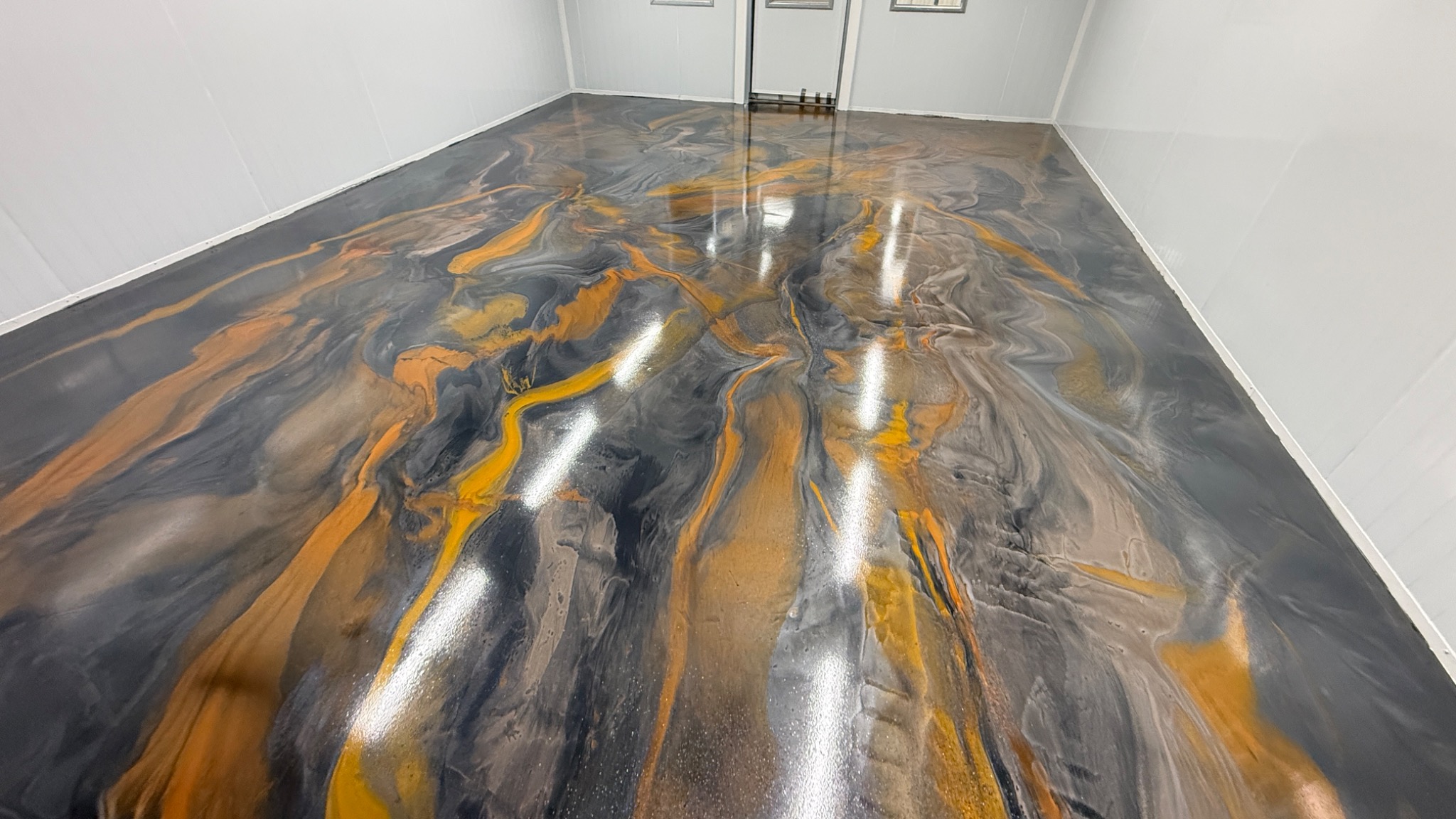
Different rooms need different flooring performance
A production floor should be specified by exposure and operations—not by using one generic coating everywhere.
Processing & Production
Heavy-duty flooring for repeated cleaning, impact, traffic and ingredient exposure around production equipment.
Wash-Down Areas
Seamless, textured assemblies designed around water, sanitation chemicals, sloped surfaces and drainage.
Coolers & Freezers
Transitions and repair details planned for thermal movement, condensation and temperature changes.
Bakeries & Kitchens
Durable systems for hot liquids, grease, flour, cleaning chemicals, carts and intensive daily use.
Beverage & Brewery Rooms
Chemical- and moisture-resistant flooring for brewing, bottling, canning, storage and cleaning zones.
Packaging & Warehousing
Abrasion-resistant floors for pallet jacks, forklifts, loading, packaging equipment and pedestrian routes.
Match the assembly to the actual exposure
Final product selection depends on the substrate, temperature, cleaning process, chemicals, traffic, texture requirements and return-to-service window.
Urethane Cement
Often suited to demanding production, commercial kitchen and wash-down areas where thermal shock, chemicals, moisture and impact are major concerns. Learn more about our urethane cement flooring systems.
Quartz & Epoxy Systems
Decorative, durable and cleanable assemblies for lighter production zones, corridors, packaging areas and spaces requiring added texture.
Coves, Drains & Details
Integral cove bases, equipment pads, penetrations, transitions and drain interfaces are coordinated to reduce weak points and improve cleanability.
Plan the shutdown before work begins
Facility Assessment
Review floor condition, use, cleaning, chemicals, temperature and traffic.
Substrate Preparation
Mechanically prepare concrete and identify cracks, contamination and weak areas.
Repair & Install
Complete concrete repairs, drainage details, coves and specified flooring layers.
Return to Service
Coordinate curing, protection, inspection and reopening with facility operations.
Targeting B.C.’s strongest food-production corridor
We serve industrial properties throughout Metro Vancouver and the Fraser Valley, with broader British Columbia mobilization available for suitable projects.
Prepare for a useful facility assessment
Share the operating conditions—not just the square footage. This allows us to recommend a system and phasing plan that fits the facility.
Helpful Project Details
- Room dimensions or floor plans
- Current floor condition and photographs
- Cleaning chemicals and wash-down temperatures
- Production shutdown window
- Traffic, impact and slip-resistance requirements
- Drain, cove and transition locations
Food Processing Flooring Questions
What flooring is suitable for a food processing plant?
The appropriate system depends on temperature, chemicals, wash-down practices, traffic, moisture and required texture. Urethane cement is often considered for demanding wet or thermal-shock environments, while epoxy or quartz systems can suit other production and support areas.
Can you repair damaged concrete before installing the floor?
Yes. Miyagi Construction provides concrete repair, crack treatment, patching, surface preparation and resinous flooring, allowing the substrate and finish to be coordinated under one contractor.
Can installation be completed in phases?
Yes. We can plan work by room, production zone or shutdown window. Phasing, access, curing and protection requirements should be established before mobilization.
Do food floors require integral cove bases?
Cove bases are commonly used to create a cleanable transition between floors and walls. The required height, radius and termination detail should be coordinated with the facility’s hygiene and construction requirements.
Which areas do you serve?
We serve Vancouver, Surrey, Delta, Richmond, Langley, Abbotsford, Burnaby and other communities across Metro Vancouver and the Fraser Valley. We can mobilize elsewhere in British Columbia for suitable projects.
Planning a food or beverage flooring project?
Send us your facility information, photographs and shutdown requirements for review.